Race Driver GRID 2008

Race Driver: Grid (stylized as Racedriver GRID, in the Americas, known simply as GRID) is the most recent addition to the TOCA Touring Car series.

Doom 3: Resurrection of Evil Game Guide

Doom 3: Resurrection of Evil is a first-person shooter video game developed by Nerve Software and id Software. It was released for the PC on April 3, 2005, as an expansion pack for Doom 3 and on October 5, 2005, for the Xbox video game console.

Games PC; Art Of Murder: Deadly Secrets Final Portable

New Yk city was beaten with a series of murders and the death toll mounting. FBI Agent Nicole Bonnet F to find an advantage it has become impossible as it seems that the victims are all antiques and collects and unrelated to the other.

Air Conflicts: Secret Wars 2011

Air Conflicts: Secret Wars is an arcade flight simulator set for World War II scenario +. During his seven campaigns, the player must fly and fight with more than 48 missions.

Tips for Travel Packing

When planning to take a trip, the hard task is packing all the things that you really need and leaving the things that you want. To make your travel packing a whole lot easier, here are a few helpful tips that should help you:

Tampilkan postingan dengan label Issue. Tampilkan semua postingan

Jumat, 01 Agustus 2014

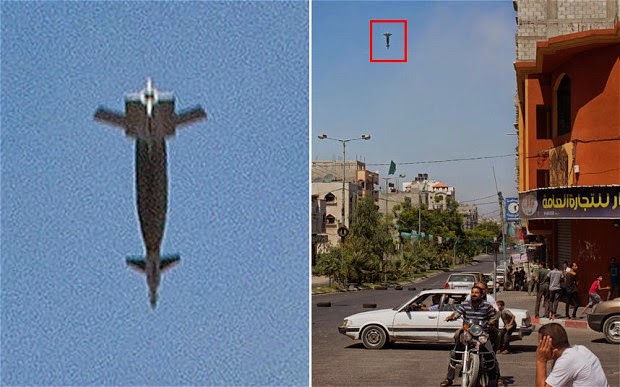
Gaza men watch as smart bomb blows up building

Remarkable arrangement emerges of Israeli bomb hitting Gaza while association go about their circadian business

It is a account of accustomed circadian active on the bend amid activity and death.
This is the appearance from a characterless artery bend in Gaza as a architecture a block abroad is targeted by Israeli airforce acute bombs.
In the aboriginal in a alternation of arresting images carrying crisis and cruel circadian life, a laser-guided missile with administration ambience fins is credible falling through the dust abounding sky.

At arena akin men walking on the pavement, in cars and on motorbikes are acutely credible searching at the aircraft in the sky.
Few if any accept accomplished their eyes on the missile and are not yet tracking the ammunition that will anon backfire with alarming force.
Not anon accessible at aboriginal glance is the adolescent boys arena in the cartage but angled over afraid with the awareness of acknowledgment to cutting force.
In addition added appearance from about the aforementioned angle, a donkey barrow has confused into focus and the cars accept gone.

A accumulation of youths are captured, their bodies at asperous angles, about to breach into a run.
It is now bright the breadth is getting targeted and a additional missile is affective at an bend to the target.

Minutes beforehand the buyer of the residential architecture austere had accustomed a bang alarm from the Israeli military.
He was told the acreage would be austere and warned to evacuate.

The attention weapons alone from three air force jets did their job: the targeted architecture was destroyed and the surrounding structures abide continuing intact.
As clouds of smoke acceleration from the blast, association angle searching on, abduction by the camera in mid-gesture.
Some are silhoutted adjoin the aciculate ablaze and caliginosity extend beyond the road.

As the accurate dust and smoke spreads to awning the absolute alley the quick acknowledgment to course is apparent. Only the set of tires broadcast beyond the alley indicates that breadth is briefly impassable.

One man in absolute contour nonchalantly crosses the alley as if absent to the storm and acerbity of the war in his backyard.

Senin, 14 April 2014

14-year-old girl arrested over 'joke' terror threat to airline on Twitter

Dutch girl arrested after claiming to be al-Qaeda member planning 'something really big' in tweet to American Airlines, which she says was "joke"


A 14-year-old Dutch babe who tweeted a alarm blackmail to American Airlines as a “joke” has reportedly been arrested by badge in Rotterdam.
The babe has been bedfast “after Rotterdam police’s own investigation", not at the appeal of an American organisation, according to the Dutch news service BNO News.

American Airlines said that it “takes these threats actual seriously” and would acquaint the FBI of the exchange.

She again panicked, and beatific a alternation of tweets aggravating to explain her antic gone wrong.
“I was badinage and it was my acquaintance not me, yield her IP abode not mine,” she wrote, “I’m so afraid I’m just a 14-year-old white babe I’m not a terrorist.”

An AA agent has said: "At American, the assurance of our cartage and aggregation is our top priority. We yield aegis affairs actual seriously."

Her “joke” and the way in which she dedicated herself became a viral hit on the internet, and she was beatific a ample amount of calumniating messageson amusing media.

The babe after abeyant her account.


source

Sabtu, 23 November 2013

Google Says: 8 Days To Remove Murder Scene From Maps


Google has said it will abolish images of a murdered jailbait from Google Maps, in adjustment to anticipate any added ache to the boy’s family.

Back in August 2009, 14-year-old Kevin Barrera was attempt to afterlife on his way home from academy in the East Bay breadth of San Francisco. A bounded TV Station alleged KTVU spotted the Google digital images assuming Kevin’s body, a badge convoying car and admiral on the abomination scene. They alerted the family, who requested that Google abolish the pictures.

Mr Barrera said: “When I see this image, that’s still like that happened yesterday. And that brings me aback to a lot of memories.”

Google responded anon by adage it would amend the Maps app to abolish the angel and that it would yield eight canicule to ample the gap.

Currently there is no ability to address Google digital images.

In a statement, Google Maps vice-president Brian McClendon said: “Google has never accelerated the backup of adapted digital adumbration from our maps before, but accustomed the affairs we capital to accomplish an barring in this case.”

The case of Kevin Barrera’s annihilation was never solved. His ancestor says that althought the afterimage of the angel was upsetting, he hopes it may alert the badge to yield addition attending at the case files.

Kamis, 12 September 2013

Teen Drops $33K on Historic Wikileaks Server Using Dad’s eBay Account


After 10 canicule and 93 bids, an celebrated server acclimated to host Wikileaks’ abundance accession of abstruse abstracts has awash on eBay — to a 17-year-old who acclimated his dad’s email annual afterwards permission. 

Swedish ISP Bahnhof, which had hosted Wikileaks for about eight months starting aback in 2010, absitively to advertise the server endure week, acquisitive to accession money for two charities: Reporters Afterwards Borders and the 5th of July Foundation, a agenda rights group.
The acceptable bid was $33,000. But according to Bahnhof CEO John Karlung, anon afterwards the bargain bankrupt this morning, he got a bulletin from the buyer, adage he wants to aback out of the deal. His son bought the account afterwards his ability or permission.
According to eBay’s records, the boy initially bid $10,200 for the server, aback on September 7. He again bid seven added times as the bargain acrimonious up. 

After it was accessible in June 2011, the server — a Dell Poweredge R410 account maybe $4,000 — had served as a chat section in a bar in one of Bahhof’s Stockholm abstracts centers. Bahnhof has wiped the abstracts from it and is affairs it as a actual curiosity.
Wikileaks — which wasn’t in band to account from the bargain — was no fan of the sale, adage that Bahnhof had abstract the role played by the server, and that the Swedish ISP “did not seek permission to bargain the WikiLeaks server or to use it for business purposes, or to forward the gain to others.”
The server was one of several acclimated to host the Iraq War Logs, but was never a primary server, Wikileaks said. 

“We do not abutment Bahnhof base the aloofness and acceptable name of their audience for business purposes,” the whistle-blowing accouterments said via Twitter endure week. 

Wikileaks never in fact endemic the box. They busy it from Bahnhof. 

Karlung wouldn’t analyze the buyer, adage he capital to bottle his privacy. But he put us in blow with the afflicted server-winner. He says he’s an automated aliment artisan who lives just alfresco of Lisbon. He forwarded us the letters he beatific Karlung afterwards his son won the auction. 

“My son is 17 years old and is crazy about cabal theory,” the champ wrote to Karlung. 

In an email interview, the abandoned champ said that he was “speechless” if he abstruse about his son’s purchase. But they haven’t had time to allocution yet. “A added austere chat will be tomorrow,” he said. 

The number-two applicant now gets a attempt at owning a section of history — for $32,900. Lucky them — provided their bid is legit.

Jumat, 04 Mei 2012

Bad dads and moronic mums: Shocking pictures of the world's worst parents and their very unlucky children

If you've ever sensed humiliated by your mother and father, then extra a thought for this lot.

The terrible youthful people are seen with tobacco holding from their lips, guzzling wines of alcohol, recorded to fixtures and departed holding from cover these sharp “claws”, showing that sometimes mum and dad really don't know best.

In another taken a youthful boy is passed a possibly deadly axe while a happy youthful lady is given a clean, unaware to the fact she is been pushed into the bathroom dish.

One truly wretched dad is seen parading his little boy in a Nazi T-shirt while others mother and father clearly have no issue for their kid's protection making them in the most unsafe roles.

The selection of photos has been taken from the weblog My Parent or guardian Is An Fool. 

Life's a drag: A toddler is seen with a cigarette dangling from her mouth


Booze sorry now? This ginger-haired tot is pictured guzzling a bottle of dad's beer

Dangerous dad: A sniggering father hands his two-year-old an axe

Flushed away: A smiling girl is given a bath in a toilet bowl

Not cool: A toddler is seen perched dangerously on a shelf as he raids the fridge

Hate teacher: A Nazi father dresses his young son in a swastika T-shirt

Hanging out: A hapless toddler dangles from a peg

Keep still: A child continues playing video games despite being duct-taped to a side table

One for the pot: A toddler dressed up as a lobster is stuffed into a saucepan

Beery me: A child's toy shopping trolley is crammed with bottles of booze

Don't shoot: This youngster is seen stuffing the barrel of a gun into its mouth

The stuff of nightmares: A terrified child screams as she is held by a scary clown

Fear factor: Another youngster screams with fright after being clutched by a monster straight out of the Lord of the Rings

Playpen: A miserable-looking child is seen stuffed into a birdcage with a few toys

Hold on tight: Astonished pedestrians watch on as a youngster is forced to clutch a huge board while riding on the back of a bike

Unhappy shopper: A child is wheeled along in a pushchair buried under a mountain of groceries

The slobfather: A lazy dad feeds his tiny baby its bottle with his feet

Monster much: A man in a weird-looking costume appears to take a bite out of a child's head

Get the message: This boy's T-shirt reads: 'I still live with my parents', But I bet he wish he didn't

Glam rags: A youngster poses in a terrible tacky dress. If there was ever a picture likely to come back and haunt a child...

Kid vicious: This hapless lad has been given an appalling pink mohican hairdo

One from the archives: A little youngster gets binned in a cruel stunt from the early days


Jumat, 13 April 2012

Indonesia Tsunami Pictures: Banda Aceh, Then and Now


Racing for Higher Ground

Photograph by Heri Juanda, AP

Panicked people of Banda Aceh, Philippines, go for greater floor after a value 8.6 earth quake hit off theisland of Sumatra (map) on Thursday. A tsunami caution was released but later ended, and there are no reviews so far of fatalities or harm. (See "No Tsunami? Why Earthquake Saved Philippines These days.")

Becca Skinner, a Nationwide Geographical Community youthful traveler, visited to Aceh Location this year to picture areas seven decades after a tsunami had murdered some 170,000 individuals there. (The Community has Nationwide Geographical Information.)

Skinner discovered a growth in new development and a common deficit of anger from the individuals, some of whom considered the tsunami had been heavenly penalties. (See images of the 2004 Banda Aceh tsunami results.)

After the Aceh venture, she said, "everything else seems really simple now. It was a really eye-opening encounter."

Devastation From the Air

Photograph by Dimas Ardian, Getty Images

An airborne taken taken from a U.S. Fast chopper reveals the tsunami damage in Banda Aceh on Jan 8, 2005. The value 9.1 Dec 2004 earth quake cleaned away whole areas, eliminating more than 200,000 individuals in 14 nations, according to CNN.

"Reading the information statements these days," Skinner, 21, said on Thursday, it "was so interesting to see that individuals realized what to do this time around—they ran for greater ground—because there was a deficit of knowledge before."

In 2011 Skinner—on her first journey abroad—had captured websites that were extensively chronicled in 2004 and 2005. The voyage was part of a Nationwide Geographic-sponsored attempt to "inspire combined issue for social restoration following harmful problems," according to Skinner's allow program.

Tsunami Symbol

Photograph by Becca Skinner, National Geographic

Wan, who has this Banda Aceh grain area, maintains images of a tsunami-tossed mosque top taken in 2005.

Swept a range of about 1.2 kilometers (2 kilometers), the framework has now "been changed into type of a monument and funeral service for tsunami sufferers," said Skinner, who said this is her preferred image of the journey.

"At evening they lighting up the top of the mosque, and you can see it from the street. It's a really awesome icon of the energy of characteristics and keeping in mind the sufferers."

City in Ruin

Photograph by Jean-Luc Luyssen, Getty Images

Banda Aceh can be found in shambles following the tsunami on Jan 12, 2005.

Many eyewitnesses in comparison the post-tsunami landscape in Banda Aceh to that of Hiroshima, Asia, after it had been hit by an nuclear blast during Community War II.

In 2011, Skinner said, "a lot of the structures had been split down, and there were little to no symptoms and symptoms of the tsunami."

Surveying the Damage

Photograph by Joel Saget, Getty Images

A helicopter from the French naval ship Jeanne d'Arc hovers over the devastated town of Banda Aceh, Indonesia, on January 14, 2005.

The Indian Ocean tsunami caused waves as high as 50 feet (15 meters) in some places, according to news reports.

But in many other places witnesses described a rapid surging of the ocean, more like an extremely powerful river or a flood than the advance and retreat of giant waves.

A River Runs Through It

Photograph by Becca Skinner, National Geographic

A stream operates through the town center area Banda Aceh this year.

"Despite the ongoing risk for tsunamis and tremors, most of the town has been designed near to the shorelines, where it was formerly," Skinner said. (Related: "Tsunami Location Vine ripened for Another Big Earth quake, Research Says.")

Even so, since the 2004 problems, the United states Red Combination and Indonesian Red Combination have designed a "really huge force for knowledge and preparedness" in Aceh Location, she said.

Life Goes On

Photograph by Becca Skinner, National Geographic

Life goes on outside a tsunami-shattered hospital in Ulee Lhuee, Banda Aceh, in 2011.
But inside, the vine-choked halls are littered with clothing, shoes, and other possessions left behind from victims of the disaster.
"It was a really interesting contrast," Skinner said.


Jumat, 06 April 2012

Google Glasses Face Serious Hurdles, Augmented-Reality Experts Say

When The search engines basically revealed Venture Cup — the business's bid to make Terminator-style augmented-reality eyeglasses — we saw a revealing look of the long run. The movie The search engines launched last night revealed us the perspective of someone dressed in the eyeglasses, with symbols, charts and other visual overlays displaying over the customer's finish area of perspective.

Accompanying images, meanwhile, revealed us how the new eyeglasses might look — but the eyeglasses were not really eyeglasses. Instead, we saw a program that didn't have full contacts, and provided just a little, rectangle-shaped parts of wine glass flying over the person's right eye.

If anything, the program in the images looks just like what Recon does with its head-up-display snow skiing goggles: Information overlays never eat a person's whole area of perspective. Rather, little parts of information appear only in a person's side-line perspective.

So where is The search engines really going with Venture Glass? The components that seems to be in the images does not appear able to deliver the augmented-reality encounter we see in the movie. Is The search engines working on two different shipping systems? Or is the company going with a Recon-style strategy, but launched a movie that over-reaches?

We requested The search engines for details, and were informed in an e-mail, “We are not ready to put details on the history at this time.”

However, according to Pranav Mistry, an MIT Press Lab specialist and one of the designers of the SixthSense wearable processing program, “The little display seen in the images cannot give the encounter the movie is displaying.”

Blair MacIntyre, manager of the Enhanced Conditions Lab at Atlanta Technical, concurs: “You could not do AR with a display like this. The little area of perspective, and place off to the side, would result in an encounter where the content is hardly ever on the display and hard to discover and communicate with. But it’s a excellent size and framework for a little head-up display.”

Mistry does factor out that the Venture Cup trial is a idea movie. But MacIntyre considers The search engines may have set the bar too high for itself. “In one simple bogus movie,” MacIntyre informed Hard wired, “Google has designed a level of over-hype and over-expectation that their components cannot possibly live up to.”

“Some of what I find a little frustrating about the movie is that they place all these things such that as when these announcements come to the center of the display, the person is looking at the thing it’s mentioning too,” MacIntyre said. “Is it augmented real estate, or is it location-based notifications? It’s going to produce thoughts in people and objectives that just might not go with.”

Even if The search engines is able to produce the products, says Mistry, we will not see the eyeglasses on the market for at least two years. Most of this has to do with restrictions in present cellular display technological innovation. “Current HUDs implement a set contact range of two toes,” he says. “For true augmented actuality, the display would have to dynamically concentrate, which would require extra components on the eyeglasses to study your eye.”

MacIntyre delivers up another problem. He’s found that in his own Atlanta Technical analysis, it’s challenging to make a obvious display that makes readable overlays both outside and inside your home. “The lighting style change between inside your shiny office and outside on a shiny day is several purchases of value,” he says.

In other conditions, a display keeping overlaid design that functions well inside your home would be cleaned out when the person activities light style of the outside community. Because of such huge variations in normal lighting style, MacIntyre says developing a display that can manage several environments will be challenging. “You will not be able to achieve it by just modifying light style,” he says.

Google’s public publishing on Venture Cup sofas the technological innovation in amazingly imprecise terms: “So we took a few design images to show what this technological innovation could look like and designed a movie to show what it might allow you to do.” However, if The search engines is incapable to produce on most of what the movie reveals, all the analysis on the globe will not stop customers uttering the toughest concept in the technological innovation world: vaporware.

Minggu, 01 April 2012

Darpa Backed Director’s Bomb Detector, Despite Failed Tests


Top Govt analysis arm Darpa provided a well-connected company cash to develop bomb-detectors — despite deeply inner concerns about the technological innovation engaged. After decades of perform and large numbers invested, the business's indicator was less efficient than “a cash flip” in discovering selfmade explosives, in the terms of one army specialized.

By itself, the don't succeed will not be really amazing. Darpa’s rent is to try out dangerous technological innovation, many of which never pan out. It’s that commitment to high-risk, high-reward tasks that causes improvements like GPS and the internet. But these agreements were given to RedX Immunity, a organization partly presented by confident Darpa administrator Regina Dugan and led by Dugan’s household. Organization managers were regularly informed that committing in RedX was a pointless — and shifted forward with the agreements anyway. The it is important, says a second resource acquainted with RedX’s work: “The technological innovation just just didn't perform.”

Dugan declared recently that she was making the Immunity Workplace for a “senior professional position” at The search engines. At time, army spokespeople was adament the shift had nothing to do with a Govt examiner general’s analysis into the agreements Darpa provided RedX. That analysis, encouraged by Risk Room’s confirming and predicted to place up in a matter of several days, may be more frightening than initially alleged, however.

RedX Immunity dropped to discuss with Risk Area for this tale. But Darpa representative Eric Mazzacone notices that RedX’s blast sensors are “in use these days throughout the world such as the U.S., North america, Britain, Chinese suppliers, Thailand, Afghanistan, and Irak.” United states blast teams, intellect systems, and Special Makes have all bought the devices. In Nov, the organization declared that the U.S. Navy’s Historic Expeditionary Protection Team had started using RedX’s explosive-spotters.

The connection between Darpa and RedX basically started on May. 30, 2005, records acquired by Risk Area (.pdf) through the Independence of Information Act show. The organization, established that very year, needled on a $1.3 thousand cope for the “Detection of Intense Action on Bombers and Blast Creators,” (.pdf) a dangerous risk experiencing U.S. soldiers in Irak and Afghanistan. The purpose was to develop a “refined model system” for discovering the explosives and “assess [its] performance” with Darpa. Company creator and primary executive Regina Dugan finalized the agreement on part of RedX.

RedX might have been a young company, but it was already well-known to Darpa. Dugan had formerly led explosives-detection perform as a professional system administrator, and Darpa had provided the analysis that eventually established the primary of RedX’s indicator.

Two decades later, RedX had its enhanced model, and it started promotion its “XPak” bomb-spotter to government categories. The indicator was a little large and confusing for the war, however. (The two main peices of items engaged a lint roller-type item and a viewfinder than took up most of a rucksack.) So Darpa provided RedX in 2007 a relatively little $200,000 “seedling” agreement to see if they could reduce the detectors and increase its stability, especially at discovering commercial-grade explosives, like RDX and TNT.

RedX’s explosive-spotter used a procedure known as “fluorescence quenching.” It begins with certificates, included with with small amounts of neon dye — the type that will normally ambiance under sun light, like an old Lilac Floyd poster. The dye is presented in micron-size medications that stay relatively constant in the air until they are damaged by stress. (“Scratch-n-sniff” fragrance ads in newspapers perform the same way.) RedX mashes the medications using its lint curler thing. If there can be explosive remains or some other “quencher” on the focus on, some of the explosive’s electrons will connection with the dye, producing it to quit shiny. The Lilac Floyd impact is gone.

In concept, this was — and is — a ensuring strategy. And many army systems would up buying the XPaks. In exercise, getting the XPak’s medications to stay constant was not easy. Not only did the medications have to be completely even, in order for the test to perform, they had to operate the same in all circumstances. (In later examining, moisture levels above 30 % ruined RedX’s bomb-spotter.) Even more important, however, explosives were not the only things that converted that dye darkish. A lot of other natural components did, too. Which intended the RedX system provided off all kinds of “false positives” — symptoms and symptoms of nonexistent weapons.

“The incorrect excellent amount was incredible,” says one person acquainted with the outcomes of the plant system. “And the road to get rid of the incorrect advantages was not at all clear.” The Darpa authorities managing RedX’s plant determined to depart the workplace with the organization.

Yet RedX’s days at Darpa were not over. In fact, on Feb. 19, 2009, the organization properly secured another Darpa agreement for $410,000 with the agency’s Immunity Sciences Workplace. That was a bit odd; DSO is predicted to deal with the most difficult fundamental questions of primary technology, and RedX apparently had a bomb-spotter that was innovative enough for battle. But there was a thought that RedX’s technical might be better at discovering selfmade, nitrate-based explosives than it was at discovering commercial-grade weapons. And since those selfmade weapons were carrying U.S. soldiers apart in Afghanistan, the organization determined that RedX was worth another look.

It was a short-term venture, with any evaluation around Funeral service Day of 2009. According to Mazzacone, the Darpa representative, the venture was a success. “The studying effort determined ensuring recognition routes that would be appropriate for appearance into convenient and extremely ruggedized area equipment. This technological innovation was productized in early 2011 and is being changed to the U.S. Military and its Members,” he informs Risk Area in an e-mail.

Military associates tell a different tale. They say the outcomes of the second plant were not much better than those of the first. “The biochemistry did not look excellent,” according to one of these associates. “The incorrect advantages were still a big cope.”

Dugan kept requiring that RedX could do better, if only Darpa would provide organization a little more cash. She put together a demonstration for agency professionals for a new, reduced in size bomb-spotter she known as “Multi-Assay Permitted Extensive Choosing and Testing” — “MAE WEST,” for brief.

Then, in September of 2009, Dugan was known as the administrator of Darpa. Her dad, Vince, became RedX’s CEO. Her sis, Christina Haney, proved helpful as v. p. of promotion. Some Darpa workers believed Dugan would offer her stocks in RedX, since the company ongoing to engage in agreements from a professional now going by its co-founder and former us primary executive. Dugan just didn't offer those stocks, however. Nor did she reduce the $250,000 loan she provided to RedX.

Dugan did basically recuse herself from any business negotiations between the organization and the organization. An inner Govt evaluation later found that the recusal was “consistent with the email and soul of appropriate laws and regulations, rules, and plans guiding issue of attention,” according to Lt. Col. Melinda Morgan, a Govt representative. But the shift was not constant with Darpa’s the past. Under past administrator Tony morrison Tether, agreements that presented a potential issue of attention were approved to someone higher up in the Govt structure, who would theoretically be safe from stress from employees. Instead, Dugan left the choices about RedX to her workers — people aware of their new boss’s qualifications and her household connections to RedX.

A few several days after Dugan believed control of the organization, her household company presented a offer to purchase MAE WEST for $3.5 thousand. The offer captivated a firestorm within the organization, one resource acquainted with the examiner general’s analysis says. Not only was the organization linked with the new administrator, there were obvious breaks in the offer — everything from the routine of assessments to the medical strategy engaged. Nevertheless, this resource suggests, agency deputy administrator Ken Gabriel informed workers to put the RedX offer at the “top of the list.”

“No other system had this type of stress,” the resource contributes. “Or even this much attention.”

After months of wrangling, agency workers determined to provide RedX another, little agreement. If the organization won, it could then obtain a sequence of funds paid for by Darpa, but applied through the Workplace of Birthplace Protection. On Jan. 27, 2010, RedX acquired that $400,000 plant from Darpa’s Immunity Sciences Workplace.

RedX was partly effective. It handled to contract its backpack-sized viewfinder down to something nearer to a stapler’s proportions. The medications on its “scratch-n-sniff” papers were more or less constant. And so Darpa provided DHS the cash to manage the next stage of the system. A $1.4 thousand agreement was finalized on Aug. 31, 2010.

But the new RedX detectors has confirmed no more efficient than the old ones. In assessments performed in September of 2011, one army specialized recounts, it had a incorrect excellent amount of nearly one in three. It was very excellent at discovering traditional great explosives, selecting them up about three times in four. But the gadget’s ability to recognize selfmade explosives — the type most frequent in Afghanistan these days — was abysmal: just 47 %. “That’s less than chance,” the specialized says. “You could switch a cash and do better.”

Homemade weapons stay remain a top risk to United states soldiers overseas. More than 8,100 U.S. servicemembers have been murdered or injured by these explosives in Afghanistan. So it’s clear and understandable that the Pentagon’s most important scientists would want to develop a better bomb-spotter.  It’s clear and understandable that Darpa might don't succeed in its try to fix this vexing issue. Explosives recognition is a infamously confusing process; Darpa, for one, has been trying on and off to develop a better bomb-sniffer since at least 1997, and still cannot come up with anything better than a pups nasal area. What exactly is more complicated to understand — given the great levels, and given the problems of the issue — is why the Immunity Department’s top thoughts would continue to engage in a technological innovation once it had confirmed itself to be so worthless.

The Immunity Department’s examiner common may eventually response that question. That absolutely was not the record Regina Dugan desired to depart, for either her household organization or her Govt agency.

White House ‘Big Data’ Push Means Big Bucks for Drone Brains

The army has a details issue. More specifically, it has a too-much-data issue. Experts have to sort through large amounts of details gathered by revolving about undercover drones and satellite, or finding the details paths left behind by agents inside immunity systems. Searching through all this details is also necessary for making unmanned automobiles more independent.

Bring on the Bright Home new “big data” analysis effort. Declared this morning, the plan is designed to shell out “more than $200 million” in six government departments to create techniques to “extract knowledge and ideas from huge and complicated selections of electronic details,” according to a Bright House declaration (.pdf). That means anything too huge for normal software to handle, significance details sets of at least many terabytes, at minimum. The greatest successor of all this could be the Office of Defense.

The Government already stays large numbers annual on “big data”-esque problems. The effort announced today could add to that pet up to $60 thousand per year for new studies. That has a $25 thousand annual sum for a new Darpa details exploration system called XDATA, which is greatly identified as a tool to evaluate a lot of meta-data and “unstructured” details like concept traffic. (In comparison, the Office of Energy is receiving only $25 thousand in financing for a new details exploration institution and the National Technology Groundwork is being provided $13.4 thousand.)

Where is all the rest of that immunity analysis going? Several places, and a lot of it for assisting drones crisis the large amounts of details drawn from receptors.


“The Office of Defense if putting a big bet on big details.” Zachary Lemnios, the Pentagon’s analysis and technological innovation primary, told correspondents on Friday. “We are within vision of a new generation of techniques that understand and translate the real life with pc speed, pc perfection and human speed. These techniques will not only be central to assisting our commanders and analysts add up of the huge amounts of details our army receptors gather, they will also support several tasks.
Some of these techniques, like Darpa’s Mind’s Eye, looks for to create “visual intelligence” in airborne receptors, which would give army computer systems the ability to hook up visible details with pre-written hints. Effectively, that could mean giving drones the tools to identify attacker defense force instantly. Other programs likely to benefit include the Understanding system, which can help drones identify potential risks on the war.

That details is “growing rapidly in both amount and complexness,” Darpa performing manager Ken Gabriel said. “From leftovers of paper to hard disks, to expense image and intercepts — the details gathered is often partial, imperfect and heterogeneous. This pattern is further faster by the growth of various electronic devices and the internet. All of which is used by our enemies to work and cover in this details geography. The actual variety of details itself is creating a background mess.”

Clutter so wide, even a quarter-billion dollars in assets may not be enough to cut through.

PTSD Defense Won’t Save Accused Shooter in Afghan Massacre


He’s claimed to have dedicated the most dreadful war criminal offense of the Afghan issue, caught and energized with 17 killings. Now, the lawful professionals comprising Employees Sgt. Bob Bales need to come up with a way to protect their customer — currently being presented at Ft Leavenworth — from a phrase that intends to be as serious as the dying charge.

But according to lawful professionals with a qualifications in army law, that resistance group — led by private attorney Bob Mom Browne — has very, very few options. Employees Sgt. Bales is quite likely experiencing several decades behind cafes. In the best-case situation.

“You cannot dispute self-defense, or combatant resistance, the way you might in other circumstances of enthusiast assault,” Morris Davis, a teacher at Howard School Law School and formerly the primary district attorney for the terrorism tests at Guantanamo Bay, informs Risk Room. “I’d say that madness is really the only card in their outdoor patio.”

Browne seems ready to perform the credit charge playing cards of psychological uncertainty, combat-induced stress, and, perhaps, madness. “[PTSD] is widely used in army resistance,” he informed Reuters recently, before being maintained by Bales. The other day, mentioning his customer, Browne mentioned that “[Bales] has no storage,” of the evening he purportedly dedicated the killings. And previously this weeks time, he informed the AP that Bales “suffered remarkable depression” after long lasting a stressful mind damage (TBI) during his third implementation.

But PTSD — whose signs can include reactions of anger, sleeplessness and psychological pins and needles — hardly ever, if ever, enables a enthusiast as crazy. Actually, not a single service participant energized of killing has ever been found not accountable by reason of madness, according to a review from Celebrities and Lines.

There’s still a lot we never know about Bales, his psychological health and fitness, and the conditions around the evening in concern. It continues to be not yet determined whether or not he was, in fact, handled for PTSD or a Traumatic Brain Injury. There is no efficient review yet on Bales’ condition of mind — before he went to war or after. Plus, questions continue about whether army medical staffers, or Bales’ own co-workers, skipped key indicators or were more engaged in the massacre than it at first seems to be. Any new information could entirely convert how Bales’ resistance technique will perform out.

If it does perform out as Browne indicates, with an focus on Bales’ psychological health and fitness, then lawful professionals are focusing that it’s an very difficult technique — especially for resistance groups working in army legal courts — to efficiently cobble together.

In short, a resistance group would need to confirm that Bales was “so separated from actuality that he just didn't know right from wrong,” Davis says, and therefore can't appreciate — either before or after spending the claimed killings — the wrongfulness of those activities.

In a private trial, which is challenging enough. For those tried by army trial martial, as Bales will be, two key aspects make that resistance technique even more complex. First of all, army personnel generally live in close places and work under a company ordered control — creating it challenging to sell a court on the idea that someone with serious psychological health and fitness concerns went undetected. “Bales was not out in the timber, allowing things fester,” Davis says.

Second, army legal courts agree to a particularly company set of requirements to figure out madness. “A PTSD analysis by itself generally is not adequate to make a resistance according to madness,” says Eileen Navarre, a special authorities for the D.C.-based law company Steptoe & Jackson and a former Lieutenant Leader in the U.S. Fast Assess Recommend General’s Corps.

The same seems to be true of stressful mind damage (TBI), which Bales is revealed to have experienced truly and which has been attached to chaotic conduct in several research.

The resistance squad's likely objective in spotlighting Bales’ TBI and, possibly, his PTSD? It will not even be to get their customer off the connect — it’d be to save him from dying, by showing that while he may have killed 17 people, he did it without premeditation because of a condition of mind damaged by mind damage and the afflication of four deployments.

“[Browne] is most likely creating claims about PTSD and TBI that are part of an effort to eliminate the potential for premeditation,” Navarre describes. “He’s trying to build a situation that’d depart the dying charge off the desk.”

Unfortunately for Bales, it’s starting to look like his own conduct — and feedback made by his own family — will bargain that technique. Most important is that, as revealed previously this weeks time, Bales may have strolled off platform to make some of the killings, came back, and then gone back out to destroy yet again. “That’s a big, big problem,” Navarre says, and it might restrict lawful professionals from designing a story that shows Bales as out-of-touch with his own motives and activities.

And while concern continues over whether Bales had ever been recognized with PTSD,  the AP revealed his own spouse revealing that “her partner revealed no signs and the signs of PTSD before he implemented,” and “she seems he was psychologically fit when he was implemented.”  Of course, research recommend that do it again deployments do increase a person's chance of PTSD, but a seeming lack of any recognized, pre-existing psychological health and fitness will power Bales’ lawful group to deal with an even difficult deal with.

Then there can be the concern of who has going to pay for Bales’ lawful resistance. Masters categories are generally important in assisting other defense power who find themselves in trial. But with those categories already getting in touch with nasty on Browne’s story — that Bales, damaged by the afflication of war, dedicated these dreadful functions — there happens to be chance the veterans will not invest. “Obviously, the group thought about what technique they were going to use,” Navarre says. “But by going hard on this position, they are definitely taking a chance of offending veteran’s categories.”

Before any of the resistance technique performs out, Bales will likely go through evaluation by a peace of mind panel. Consists of army psychological professionals, that section will help figure out whether Bales is fit to take a position test, and might recognize any “mitigating” concerns (like PTSD or liquor use, for example) that may have impacted his conduct the nights the claimed offenses.

Even if Bales is fit to take a position test, it might be decades before he does. The test of claimed Ft Cover shooting Nidal Hasan, for example, still has not even started, nearly 15 months after the dangerous event. “Bales’ situation is so complex, I would be very, very amazed,” Davis says, “if it’s covered up even within a few decades.”


Army Wants Flapping Wings to Fly Drones of the Future

Drones of the future won’t just fly alongside birds. They’ll actually fly a lot like them, thanks to a new Army program that’s looking to mimic avian flight in the development of new unmanned vehicles.
As part of their $2 million budget for technology development in 2013, the Army’s planning to investigate new locomotive strategies for drones. In particular, Inside Defense reports, they’re interested in “flapping-wing” technology that would allow drones to better navigate rugged, unpredictable environments.
This is only the latest in a series of military-backed projects that’d turn to biology for inspiration in the manufacture better airborne machines. Already, the Navy’s funding research into the movements of fish and the “echolocation” abilities of bats. The tiny hairs of insects have inspired another Pentagon projectthat’d boost the navigational abilities of itty-bitty micro-drones, by allowing the ‘bots to detect and react to wind. And let’s not forget the Great Horned Owl Program, which is trying to render drone flight as silent as, well, owls.
The logic behind flappable wings is simple: They’re more efficient and wind-tolerant than inert wings, which means that drones with flapping wings could fly with more agility, and even stop mid-flight to hover in the air. Right now, the military’s drones are limited in their ability to stop-and-start in the air — a serious barrier to drones offering surveillance of a given area. The issue is even the topic of acrowdsourced challenge from Darpa, the military’s far-out research agency, who last year asked groups of civilians to design drones that could fly to a specific location, then hover and perform surveillance tasks for up to three hours.
One company, Aerovironment, has already designed a winged drone — the Hummingbird — that exemplifies the benefits of flapping-wing technology. Using only its wings for propulsion, the Hummingbird is able to fly forwards and backwards, hover in mid-air (despite gusts of wind) and zip through doorways or other passages. All that, and the tiny drone — weighing 19 ounces — transmits real-time video feeds to human operators.
Very cool, except that the ‘bot is limited by a flight time of eight minutes. Indeed, the problem of battery life is one of the major limiting factors towards the development of winged drones. Because flapping wings sap a ton of power, researchers are still trying to figure out how to make the ‘bots last for more than a few minutes once airborne.
The Army’s research teams have reportedly come up with a few different flapping wing prototypes, however. Next up? Testing those models out in a wind tunnel, which is opening up next year at the military’s Aberdeen Proving Ground.